
Start your journey here
5 Steps to Help Your Child Hear Their Feelings with Myla and Aditha
All activities should be supervised by an adult.
Share
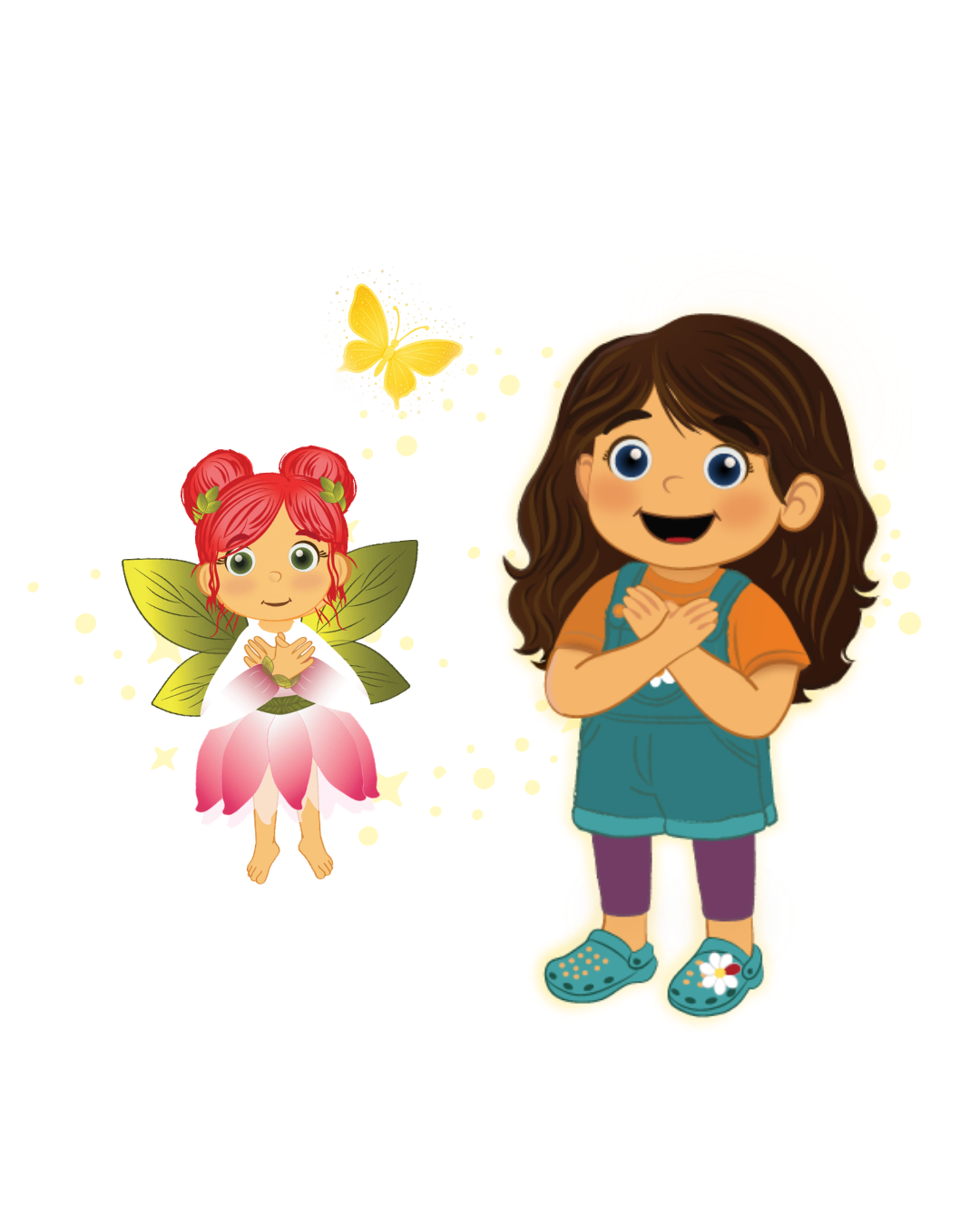
A gentle, story‑led framework from Myla Learns Wings Over My Heart to help kids (and grown‑ups) understand what body‑based feelings are trying to say.
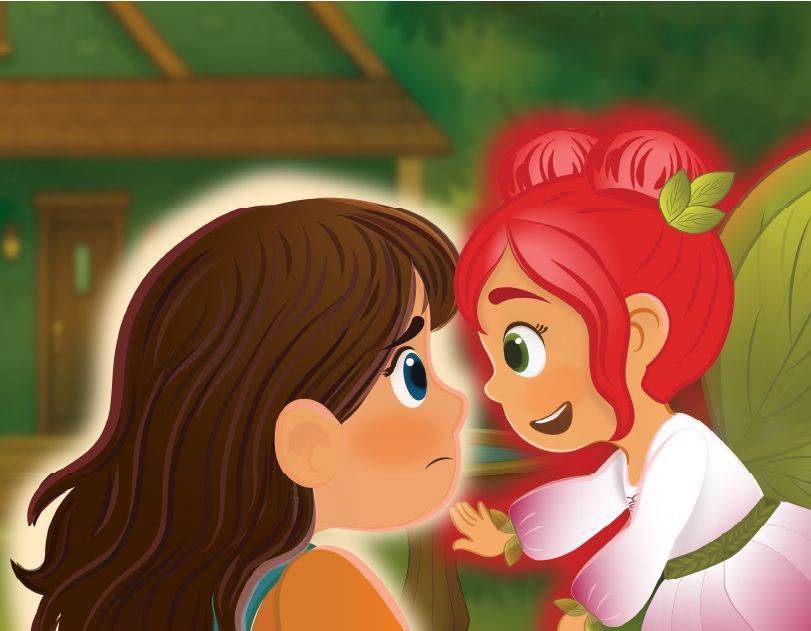
Myla and Aditha meet for the first time.
Illustration from the story
Myla Learns Wings Over My Heart
by Angela Thibault.
What Kids Need Before They Can Talk About Their Feelings
If you’ve ever asked a child to “use your words” and watched them freeze, shut down, or melt down even more, you’re not doing anything wrong — you’re bumping into how children’s nervous systems actually work.
Kids don’t start with words.
They start with sensations:
- A lump in the throat
- A stomach ache
- tears that well up out of nowhere
These body‑based cues show up long before a child can explain what’s wrong.
So when adults jump straight to talking — “Tell me what happened,” “Why are you upset?” — the child’s brain simply isn’t ready yet.
It’s not defiance.
It’s not avoidance.
It’s literally biology.
Even the CASEL framework — the foundation of SEL in schools — begins with self‑awareness and self‑management.
But what often gets missed in practice is the very first layer underneath those skills:
A child needs to feel safe and connected before they can access language, reflection, or problem‑solving.
Before a child can talk about their feelings, they need:
- safety in their body
- co‑regulation with a trusted adult
- a moment to settle their nervous system
- support noticing what’s happening inside
This is why “calm down tools” sometimes fall flat.
A tool without connection can feel like pressure.
Connection with a tool feels like support.
When we start with the body — and with relationship — children become able to understand their feelings, not just name them.
And once they understand, communication becomes possible.
This small shift — from “talk first” to “feel first” — changes everything.
In this article you'll learn:
How to help kids understand body‑based feelings
Children often feel emotions as sensations before they have words. You’ll learn how to guide them through noticing these cues. You might even begin to notice how often emotions start as sensations with in you before you find the words.
A 5‑step emotional awareness framework
This article will walk through the Notice → Connect → Listen → Validate → Choose process featured in Myla Learns Wings Over My Heart.
How Myla and Aditha model co‑regulation
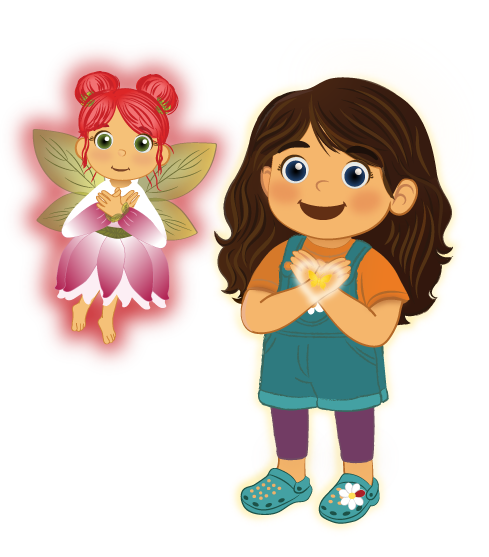
Through using "Wing Over my Heart" modeled after the Somatic Technique Butterfly Taps, Myla learns to calm her body with Aditha’s support — a model families can use at home.
How The Parallel Journey™ supports both child and adult growth
You’ll discover how practicing emotional skills together strengthens communication, trust, and resilience.
Children and adults can grow together by practicing the same emotional-awareness skills.
Busy moments happen to all of us. A rushed morning, a loud classroom, a sudden change in plans — these moments can stir up big feelings before we even know what’s happening. In Myla Learns Wings Over My Heart, Myla discovers that her tummy ache wasn’t “just a tummy ache.” It was her feelings trying to speak.
With the help of Aditha, the Root Energy Fairy, Myla learns a simple, empowering process to understand her emotions. And the best part? These steps aren’t just for kids. They’re for grown‑ups too.
This is the heart of Satori Kid Club — The Parallel Journey™ our guiding principle. It means that children and adults grow together by practicing the same emotional-awareness skills. When we model calm, curiosity, and compassion, children learn to do the same.
Below are the five steps Myla uses in the story — a framework you can use anytime a big feeling shows up.
What does The Parallel Journey™ Really Means
Most emotional‑learning models focus on the child:
- the child’s behavior
- the child’s regulation
- the child’s choices
But emotional moments are relational, not individual.
The Parallel Journey™ teaches that:
- The adult’s nervous system shapes the moment.
- The child learns regulation through connection, not independence.
- Both people are learning, adjusting, and growing together.
- Emotional safety is co‑created, not demanded.
This is why your presence matters more than your script.
This is why Myla has Aditha — and why your child has you.
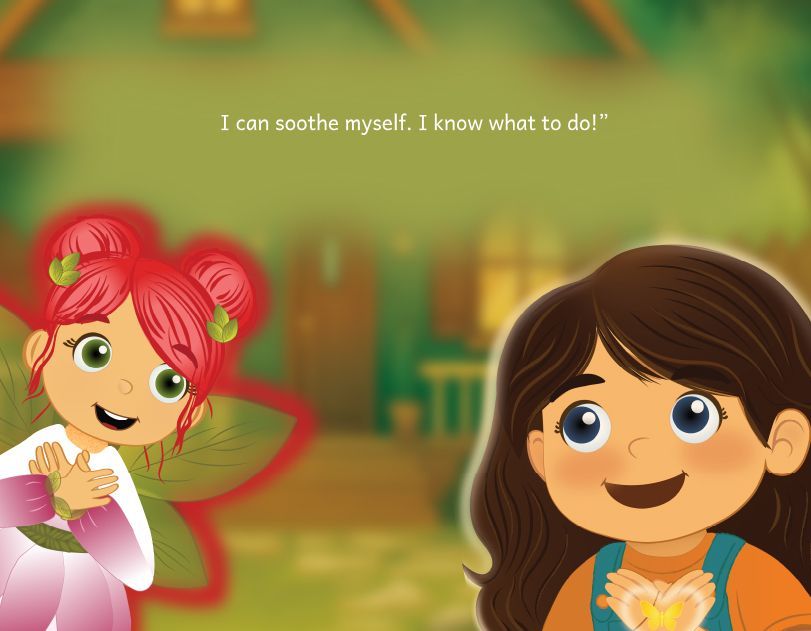
This is where the story, Myla learns Wings Over My Heart comes in. Wings Over My Heart modeled after Butterfly Taps is the gentle somatic emotional‑awareness technique. It’s a child‑friendly way to settle the nervous system with an adult beside them, making co‑regulation visible and accessible.
Before a child can talk about their feelings, they need to…
1. NOTICE — “What is my body telling me?”
Feelings often show up as sensations we feel in our body long before we have the words. A lump in the throat, a tummy ache.Tears that well up out of nowhere.
In the story, Myla’s first clue is her stomach:
“My tummy hurts. It came out of the blue.”
Noticing is the first step toward understanding. You don’t need to fix anything yet — just observe.
Try this with your child (and yourself):
- "What does your body feel like right now? Can you describe it?"
- “Where in your body is that happening?”
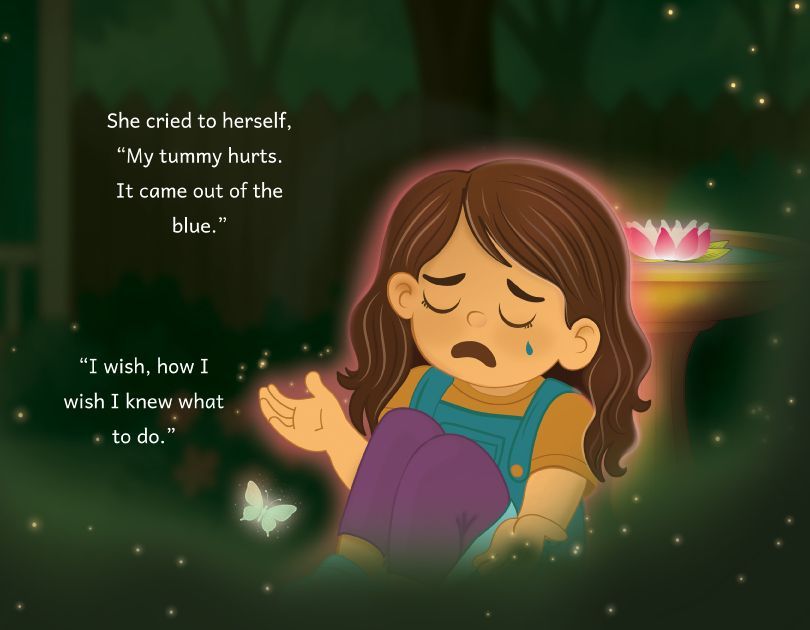
Illustration from the story
Myla Learns Wings Over My Heart
by Angela Thibault.
2. CONNECT — “Let’s help your body feel safe.”
Before we can understand a feeling, we need to feel grounded.
This is where Aditha steps in, guiding Myla through Wings Over My Heart — a gentle somatic practice used to calm the nervous system.
A somatic practice is defined as any therapeutic or developmental approach that:
- centers the body as the primary source of emotional information,
- uses physical sensation as the entry point for awareness,
- engages the nervous system directly,
- and integrates movement, touch, breath, or sensory attention to support regulation and meaning‑making.
In the story Aditha tells Myla to:
“Tap left, then right, just like a butterfly’s wings.”
Connection is about helping the body settle so the mind can listen.
Try the Technique "Wings Over My Heart" together:
- A slow breath in and out
- Hands over the heart
- A soft affirmation: I am safe. I am strong. I feel calm inside.
- This is co-regulation in action — the adult and child calming together.
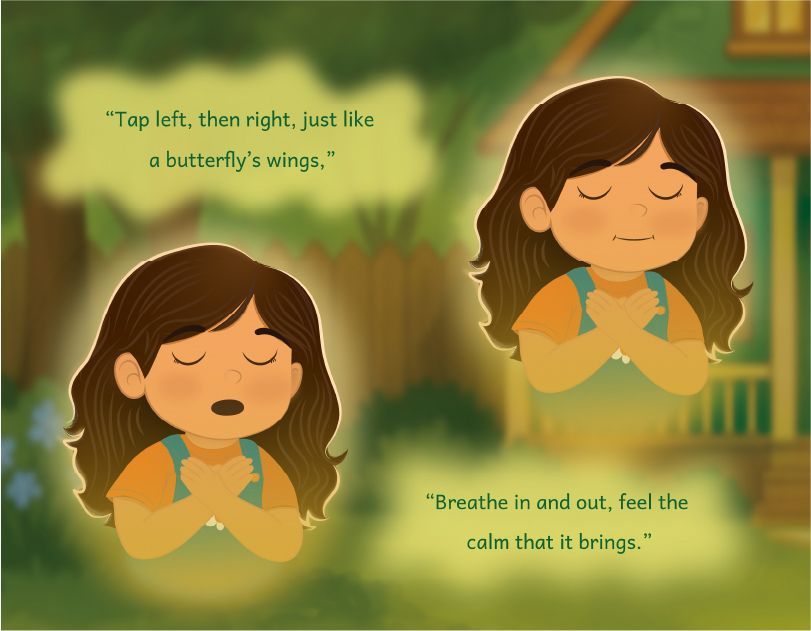
Illustration from the story
Myla Learns Wings Over My Heart
by Angela Thibault.
3. LISTEN — “What message is this feeling sending?”
Once Myla feels calmer, she can finally hear the whisper inside her.
“A memory rose up… ‘All the kids at school were being mean to me.’”
Listening doesn’t mean forcing an answer. It means creating space for one to appear.
Try asking:
- “Did anything happen today that your body might be remembering?”
- “If your tummy could talk, what would it say?”
Children often reveal more when they feel safe, not rushed.
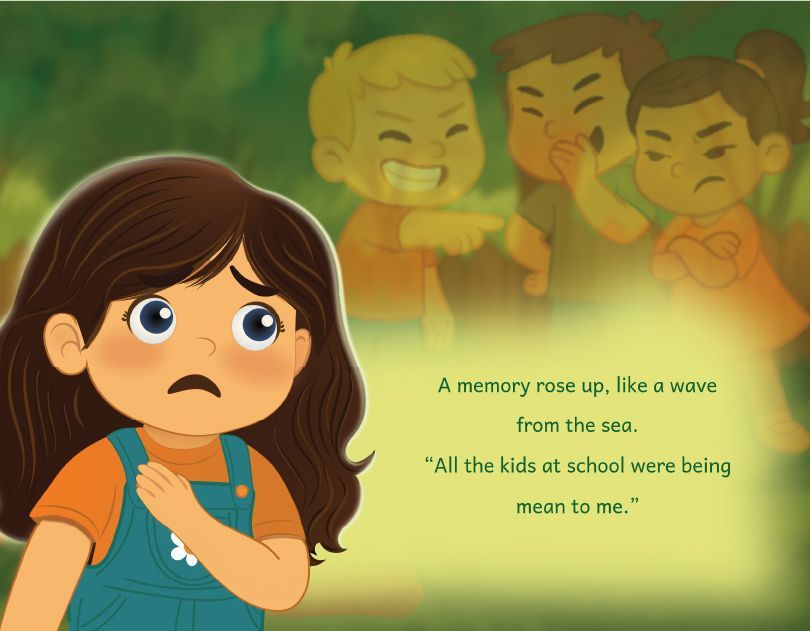
Illustration from the story
Myla Learns Wings Over My Heart
by Angela Thibault.
4. VALIDATE — “Your feelings make sense.”
When Myla realizes why she felt scared, Aditha responds with compassion:
“Of course you feel scared. Unkind words can be hard to bear.”
Validation is powerful. It tells a child:
Your feelings are real. Your feelings are allowed. Your feelings make sense.
Try saying:
- “It’s okay to feel that way.”
- “Anyone would feel upset if that happened.”
- “Your body was trying to protect you.”
Validation builds trust — both in you and in themselves.
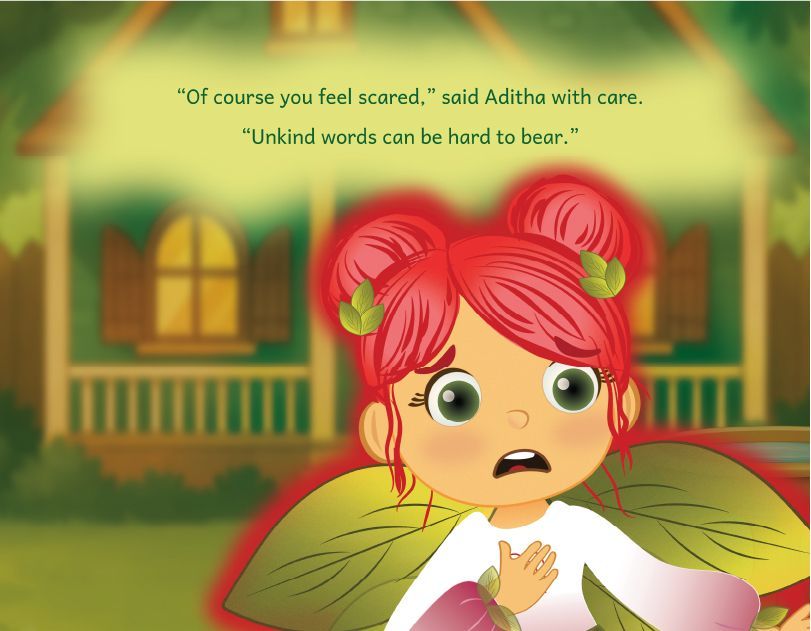
Illustration from the story
Myla Learns Wings Over My Heart
by Angela Thibault.
5. CHOOSE — “What can I do next?”
Once Myla understands her feeling, she can choose her next step:
“I will tell my mom. She’ll know what to do.”
This is where empowerment begins.
Children learn that feelings aren’t problems — they’re information.
Together, explore choices like:
- Talking to a trusted adult
- Drawing the feeling
- Asking for help
- Taking a break
- Practicing a calming tool
- Setting a boundary
Choice builds autonomy. Autonomy builds confidence. Confidence builds resilience.
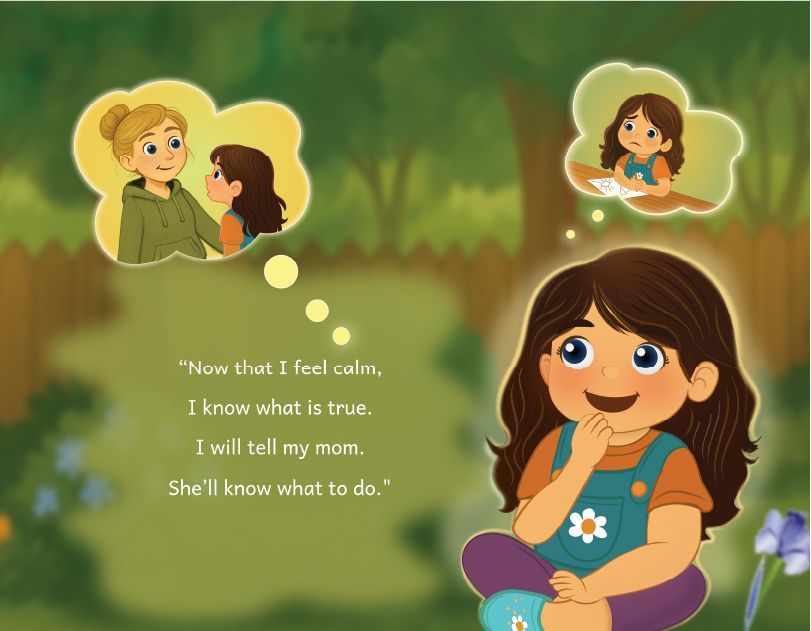
Illustration from the story
Myla Learns Wings Over My Heart
by Angela Thibault.
Why This Matters: The Parallel Journey™
Every step Myla takes is a step we can take too.
The Parallel Journey™ reminds us that emotional growth is not a one-way street.
Children learn best when adults model the same skills:
- Noticing their own body cues
- Calming themselves before reacting
- Listening inward
- Validating their own emotions
- Choosing thoughtful next steps
When we practice alongside our children, we create a shared language of emotional safety — one that strengthens connection, communication, and trust over time.
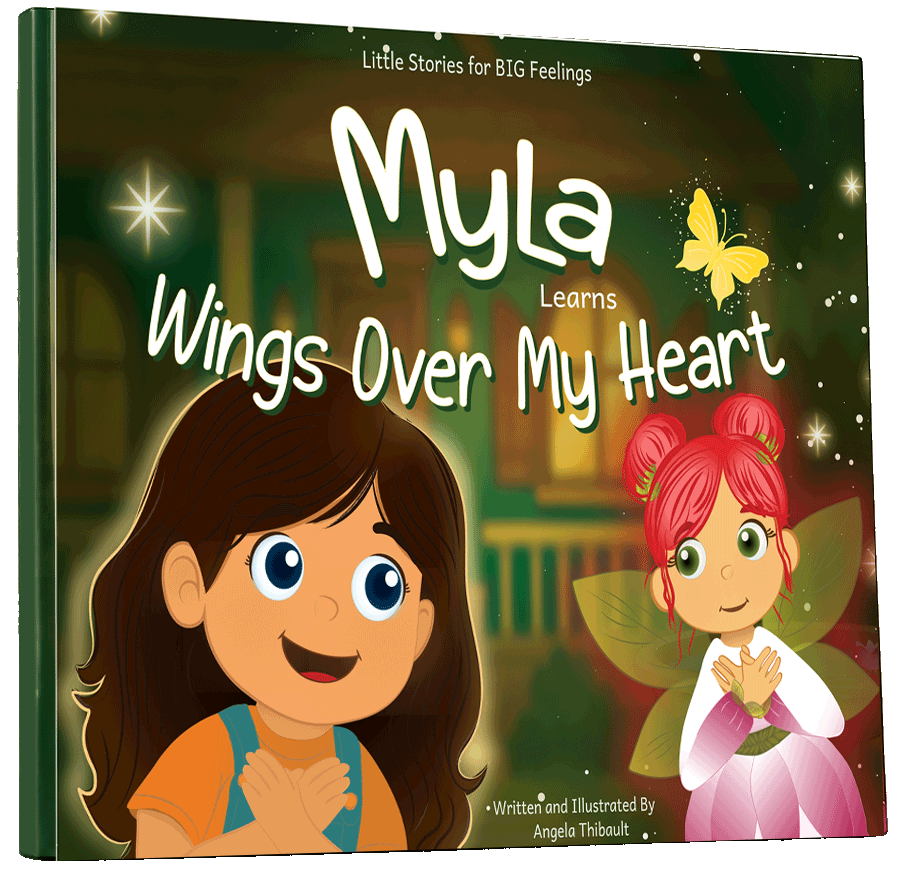
If you’d like to get started trying this framework with your child — at home, in the classroom, or anywhere kids need support Myla Learns Wings Over My Heart is the perfect story to explore these steps in a fun enchanting way.
It’s available in print and digital formats for families and educators who want a gentle, story-based way to teach MSEL.
Questions often asked by caring grownups on this journey too.
What if my child can’t describe what they feel?
Download PrintableIt’s very common for kids to feel something in their body long before they can put it into words. Instead of pushing for an explanation, try giving them low‑pressure ways to show you what’s going on — they can point to where they feel it, act it out, draw it, or tell you later when their body feels calmer. The goal is simply to help them notice what’s happening inside.
If your child likes hands‑on activities, you can use our free Myla’s ABCs of Big Feelings letter‑tracing worksheets. Each page shows Myla experiencing a feeling and gives kids a gentle way to explore emotions through letter tracing, expressions, and simple messages — perfect for children who aren’t ready to talk yet but still want to engage.
How do I stay calm when my child is overwhelmed?
When your child is overwhelmed, the most effective thing you can do is regulate your own body first. Kids naturally watch the adults around them, and modelling regulation is often more powerful than asking them to join in.
Using the technique Wings Over My Heart yourself — slowing your breath, crossing your thumbs, and tapping left–right — shows your child what regulation looks like in real time.
What if my child doesn’t want to talk?
It’s completely okay if your child doesn’t want to talk about their feelings. Talking is not required for the steps — the goal is for your child to notice what they feel inside, not to perform or explain it on command. You can let them know that sharing can help others understand them, but also validate that they don’t have to talk before they’re ready. What matters most is that they know what’s happening in their body and feel safe checking in with themselves.
If they prefer to show rather than speak, you can offer low‑pressure options like pointing, acting it out, or using a simple activity.
My child has trouble making the butterfly with their hands — what do I do?
Download PrintableSome children find it hard to cross their thumbs and make the “butterfly wings” shape, especially younger kids or kids who struggle with fine‑motor coordination. The good news is that the calming practice still works even if their hands can’t make the shape yet.
You can give them a visual, playful way to learn the movement by using our free Butterfly Finger Puppet Craft. Kids cut out the butterfly, attach it to a small paper ring, and wear it on their finger. The puppet shows them exactly how the wings move — left, then right — just like Myla does in the story. It’s a gentle bridge for little hands that aren’t ready for the full motion.
What age is this framework for?
While Myla Learns Wings Over My Heart is written for children ages 4–7, the Parallel Journey™ framework itself has no age limit. The steps are based on body‑based awareness, not language or maturity, which makes them useful for preschoolers, older kids, teens, and even adults who are still building emotional‑regulation skills. Younger children may model the motions or use visual supports, while older children can reflect more deeply — but the core practice of Notice → Connect → Listen → Validate → Choose stays the same for everyone.
How often should we practice the steps?
You don’t need a set schedule for the Parallel Journey™. The goal is for the steps to feel natural, not like a lesson. Practice them in small moments throughout the day — during play, after school, at bedtime, or whenever a feeling shows up. Each time your child or you notices, connects, listens, validates, and chooses, your brain learns what regulation feels like. Short, frequent moments work better than long sessions, and over time the steps become something your child does automatically.
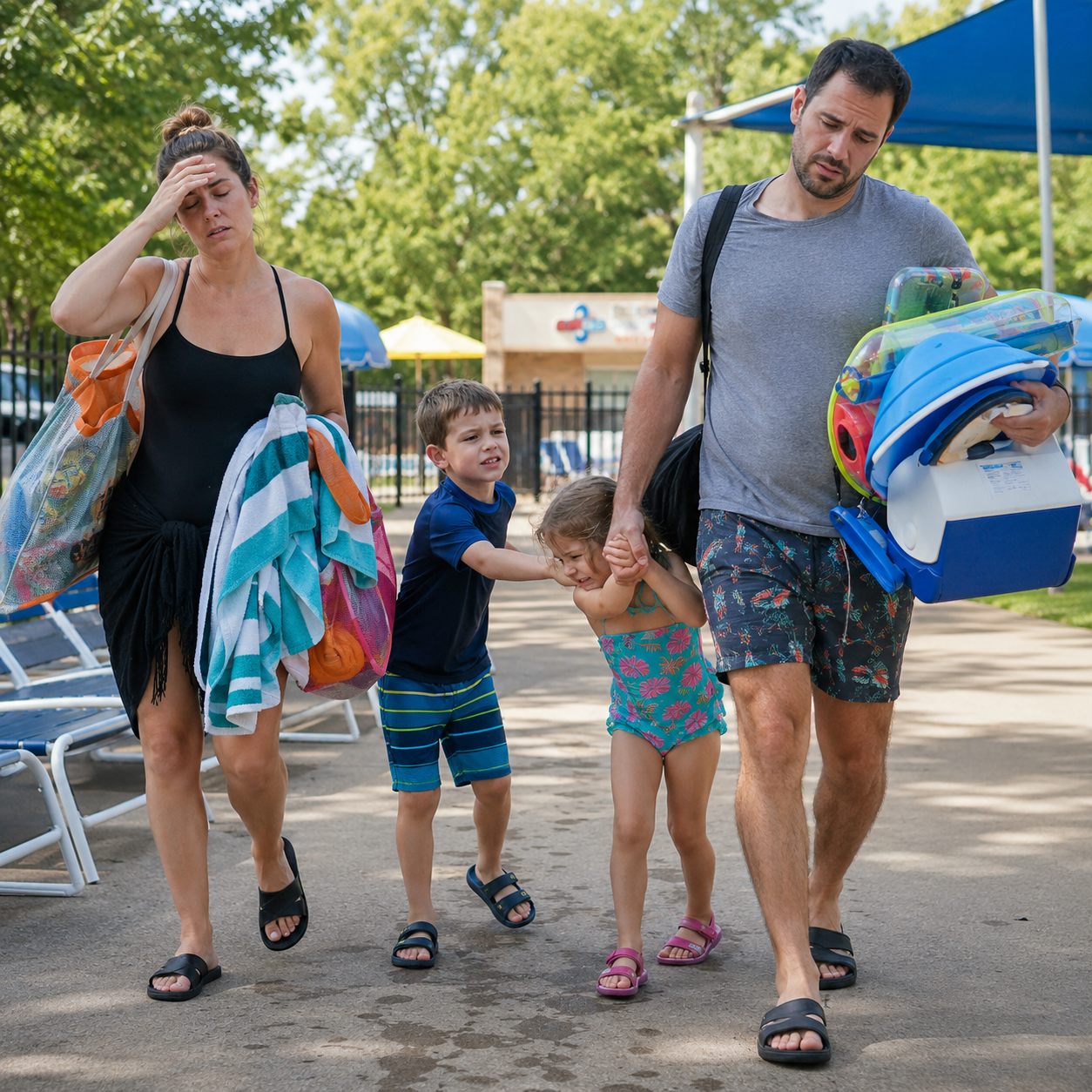
☀️Read More from My Summer Survival Series


Angela Thibault is the creator of Satori Kid Club and the author and illustrator of children’s stories that children’s stories that help children learn to process BIG feelings with confidence. She is a Relational Growth Specialist who guides families in practicing emotional awareness together through dual growth between the grown up and the child. A mother for twenty-eight years, Angela has spent the last fourteen years dedicated to early childhood emotional development and relationship-based learning.
Available Now!
Also Available in
Canada Online At:
(Availability May Vary)

and in the U.S. Online At:
(Availability May Vary)




Additional Posts You Might Like!