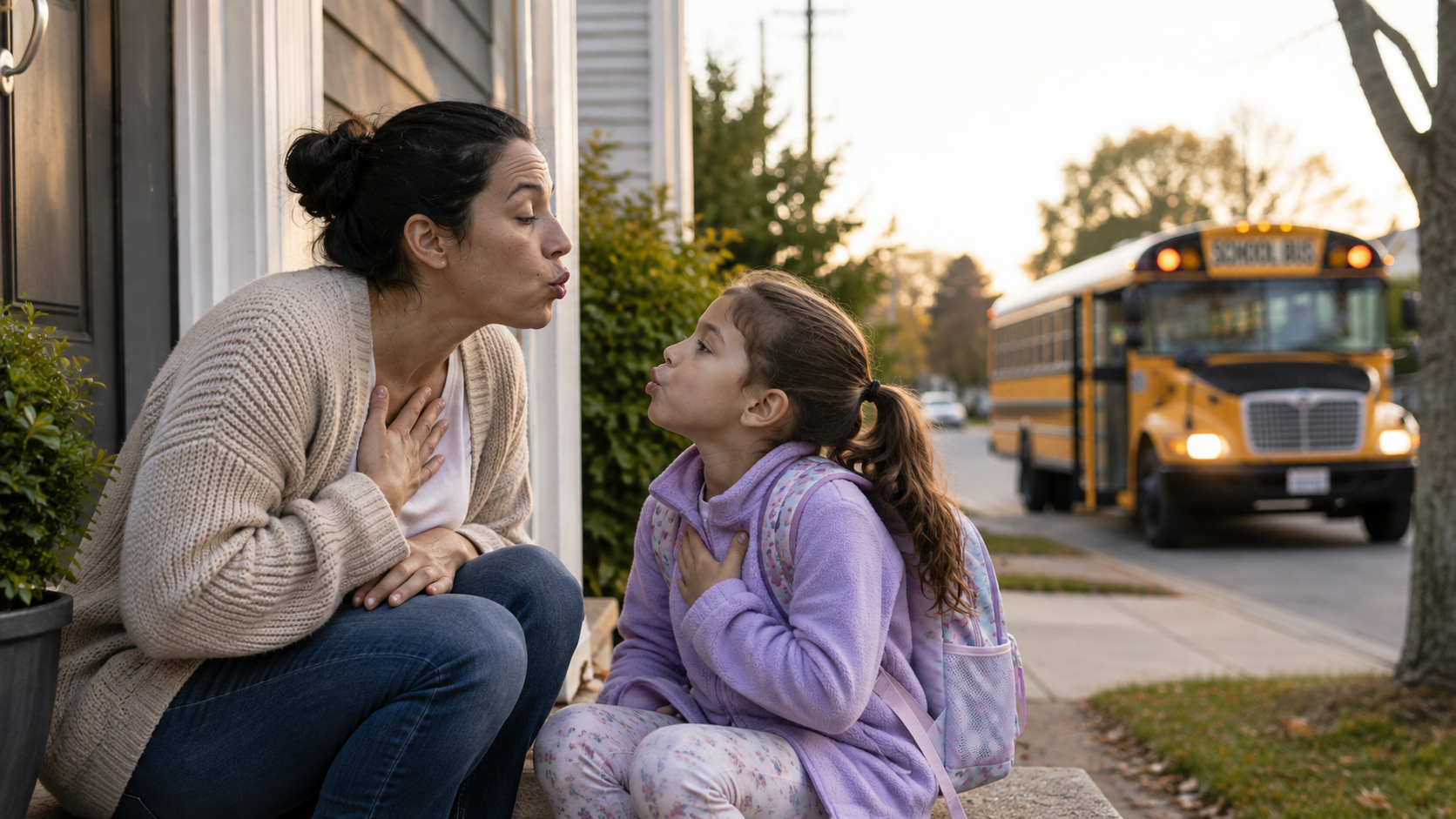

Start your journey here
Why Children Fake Being Sick and What to Do About It
All activities should be supervised by an adult.
Share

Understanding the body‑based signals kids use when they don’t yet have the words for their feelings yet.
When Morning Aches Aren’t Really About Being Sick
Some mornings, a child’s “I don’t feel good” arrives suddenly and derails everything. One day they’re fine, the next day their tummy hurts, their head aches, or they simply can’t get ready for school. It can leave you unsure of what’s real, what’s emotional, and what your child is trying to communicate. This article explores why children — especially ages 4–7 — sometimes say they’re sick when they’re not, and how to understand the feelings underneath so you can support them with steadiness and connection. (And of course, this is after any medical concerns have been ruled out.)
In this article you'll learn:
- Why “faking sick” in young children is usually emotional, not deceptive
- Kids Don’t Fake Illness to Deceive — They Fake Illness to Cope
- Common Emotional Reasons Kids Say They’re Sick When They Are Not
- How to Decode “I Don’t Feel Good” and Other Similar Statements
- What to Say When Your Child Insists They Don’t Feel Well — But You Know They’re Not Sick
- Ways to Help Your Child Regulate Before School
- When to Look a Little Deeper if Your Child Says They Are Sick, but They are Not
- The Parallel Journey™: What’s Happening for You When Your Child Says They Are Ill, but They are Not
- A Little Story That Helps Kids Understand Their Feelings
Why “faking sick” in young children is usually emotional, not deceptive
For many children ages 4–7, “I feel sick” is often less about illness and more about a feeling they don’t yet have the language for. At this age, children struggle to explain:
- “I’m overwhelmed.”
- “I’m worried about something at school.”
- “I don’t feel safe.”
- “I don’t know how to do today.”
Their bodies speak first.
Their words follow later.
So the “sick” feeling is real — even if the cause isn’t medical.
Kids Don’t Fake Illness to Deceive — They Fake Illness to Cope
Young children aren’t capable of the kind of strategic manipulation adults imagine. What looks like “faking” is often a child trying to slow things down long enough to feel safe again.
They may be coping with:
- a transition that feels too fast
- a worry they can’t name
- a social situation they don’t know how to navigate
- a body that feels tight, fluttery, or heavy
“I feel sick” becomes the closest language they have.
And here’s the part that matters for parents:
It’s very easy to feel manipulated — not because your child is doing something wrong, but because you’re already carrying the weight of adult responsibilities.
A sudden “I can’t go to school” can collide with:
- work
- schedules
- deadlines
- the pressure to keep everything moving
This is the Parallel Journey™ ,two sets of feelings, two nervous systems, both needing support at the same time.
Understanding this doesn’t make the moment easier — but it does make it clearer.
Common Emotional Reasons Kids Say They’re Sick When They Are Not
Here are the most frequent emotional roots behind “I don’t feel good” in early childhood when medical issues have been previously ruled out:
1. Overwhelm
Too many transitions, too quickly.
2. Social Stress
Friendship changes, feeling left out, or uncertainty about peers.
3. Sensory Overload
Noise, lights, crowds, or clothing discomfort.
4. Academic Worries
Fear of being called on, making mistakes, or not keeping up.
5. Emotional Safety
A child may not feel emotionally anchored in their classroom environment.
6. Physical Safety
Bullying — even in early grades — can be intense and often goes unseen.
7. Separation Anxiety
Especially after weekends, holidays, or periods of closeness.
None of these are “bad behavior.” They’re signals something deeper is going on.

How to Decode “I Don’t Feel Good” and Other Similar Statements
Once medical concerns have actually been ruled out, instead of trying to determine whether the illness is “real,” shift toward curiosity:
“Where in your body do you feel it?”
Children often point to:
- tummy
- chest
- throat
- head
This helps them move from story (“I’m sick”) to sensation (“My tummy feels yucky”), which is the foundation of emotional awareness.
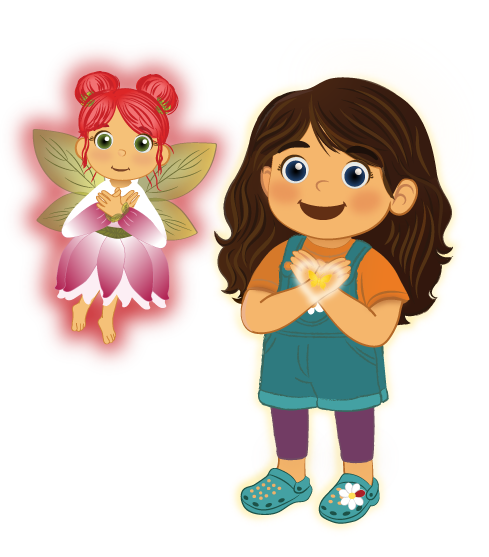
This is exactly what Myla learns in the book
Myla Learns Over Wings Over My Heart to notice what her body is telling her before she knows the feeling’s name.
What to Say When Your Child Insists They Don’t Feel Well — But You Know They’re Not Sick
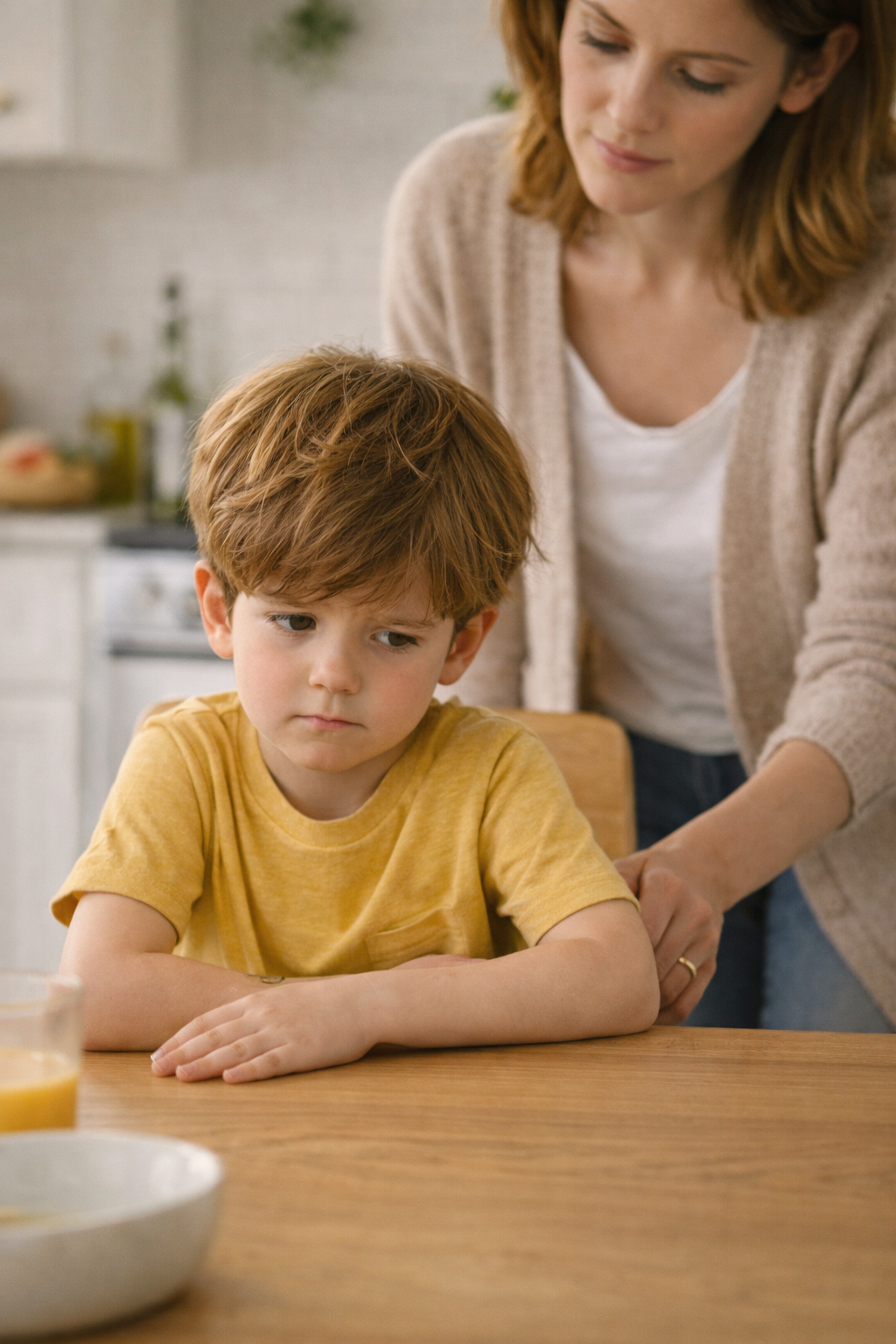
Here are grounded, supportive phrases that help your child feel understood while still moving toward the day:
- “Thank you for telling me. Let’s listen to your body together.”
- “Your tummy feels tight. That can happen when feelings get big.”
- “You’re safe. I’m right here.”
- “Let’s take this one step at a time.”
These responses reduce pressure and help your child settle enough to move forward.

Ways to Help Your Child Regulate Before School
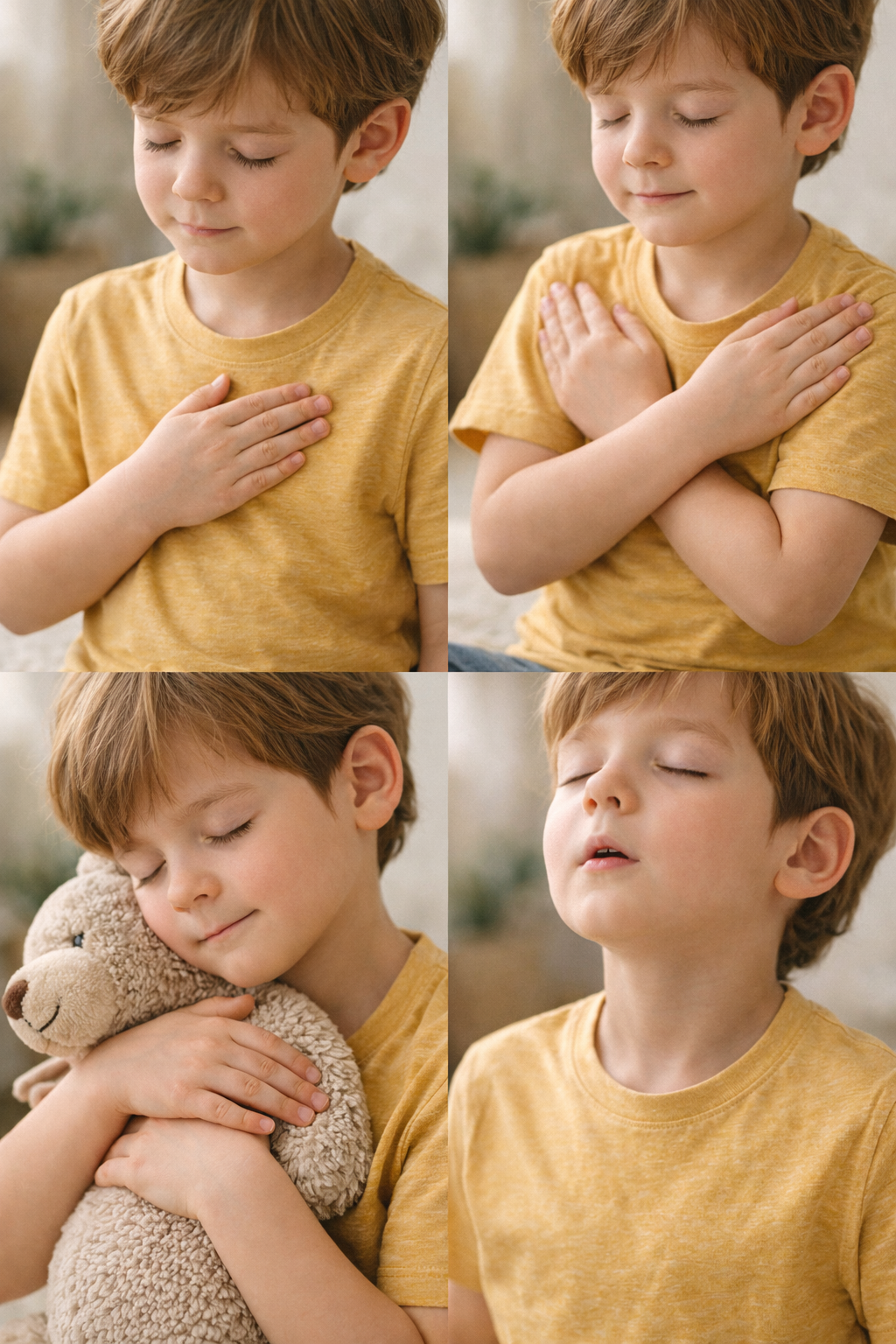
There are many self‑soothing techniques that can help children settle their bodies and feelings before a transition. Some families use breathing, grounding, or gentle movement. Others use sensory tools or predictable routines.
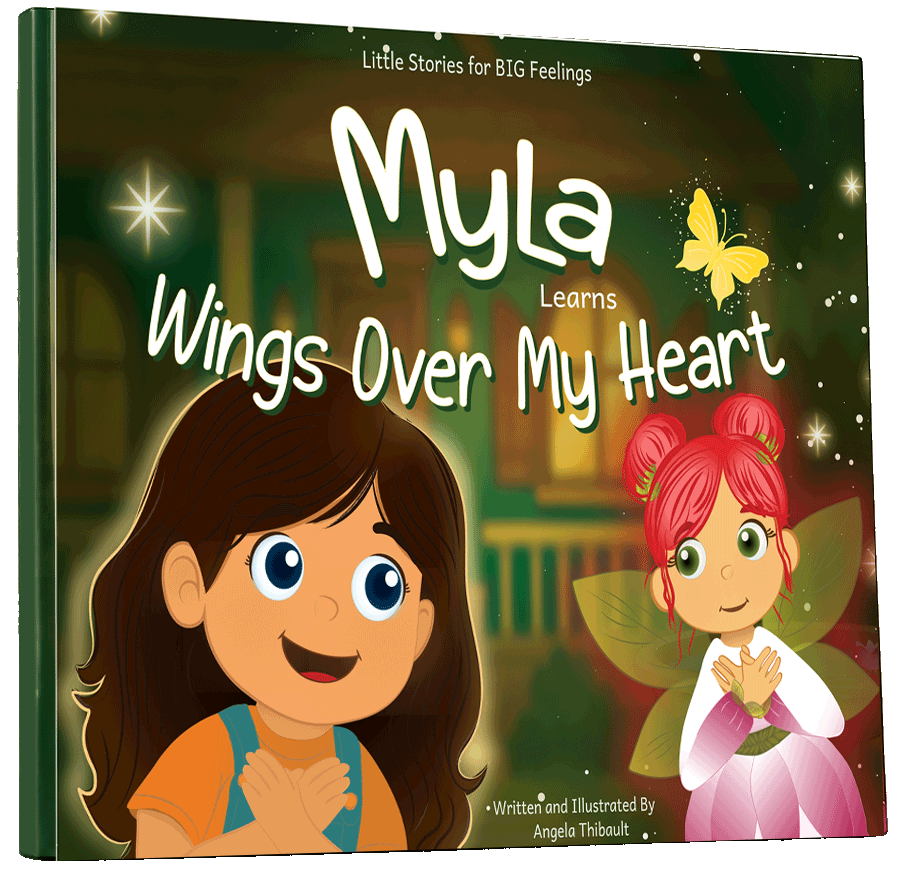
One of our favourites is Wings Over My Heart — a simple hand‑over‑heart practice modeled after the somatic technique known as Butterfly Taps. It’s highlighted in Myla Learns Wings Over My Heart and offers children a way to feel their body soften and settle.
Other supportive options include:
- gentle Butterfly Taps
- naming the feeling (“I feel ___ because ___”)
- predictable morning rituals
- a small transition object from home
These aren’t “quick fixes.”
They’re supports that help a child feel steady enough to begin the day.
When to Look a Little Deeper if Your Child Says They Are Sick, but They are Not
If the pattern continues, it may be helpful to explore:
- bullying
- sensory challenges
- learning differences
- classroom overwhelm
- chronic anxiety
You’re not searching for something “wrong.”
You’re trying to understand what your child’s
feelings have been trying to say through the body.
The Parallel Journey™: What’s Happening for You When Your Child Says They Are Ill, but They are Not
One commonly overlooked thing is this moment isn’t only about your child.
It’s also about you.
When a child refuses to go to school, two emotional experiences rise at the same time:
- your child’s feelings (overwhelm, fear, uncertainty)
- your feelings (pressure, frustration, worry, responsibility)
SKC’s Guiding Principle, The Parallel Journey™, teaches us that co‑regulation means tending to both sets of feelings in the room — your child’s and your own. You don’t have to be perfectly calm; you simply need enough steadiness for your child to borrow while also acknowledging what’s happening inside you. It isn’t about deciding whose feelings matter more. It’s about recognizing that two emotional experiences are unfolding at the same time, and both deserve care.

A Little Story That Helps Kids Understand Their Feelings
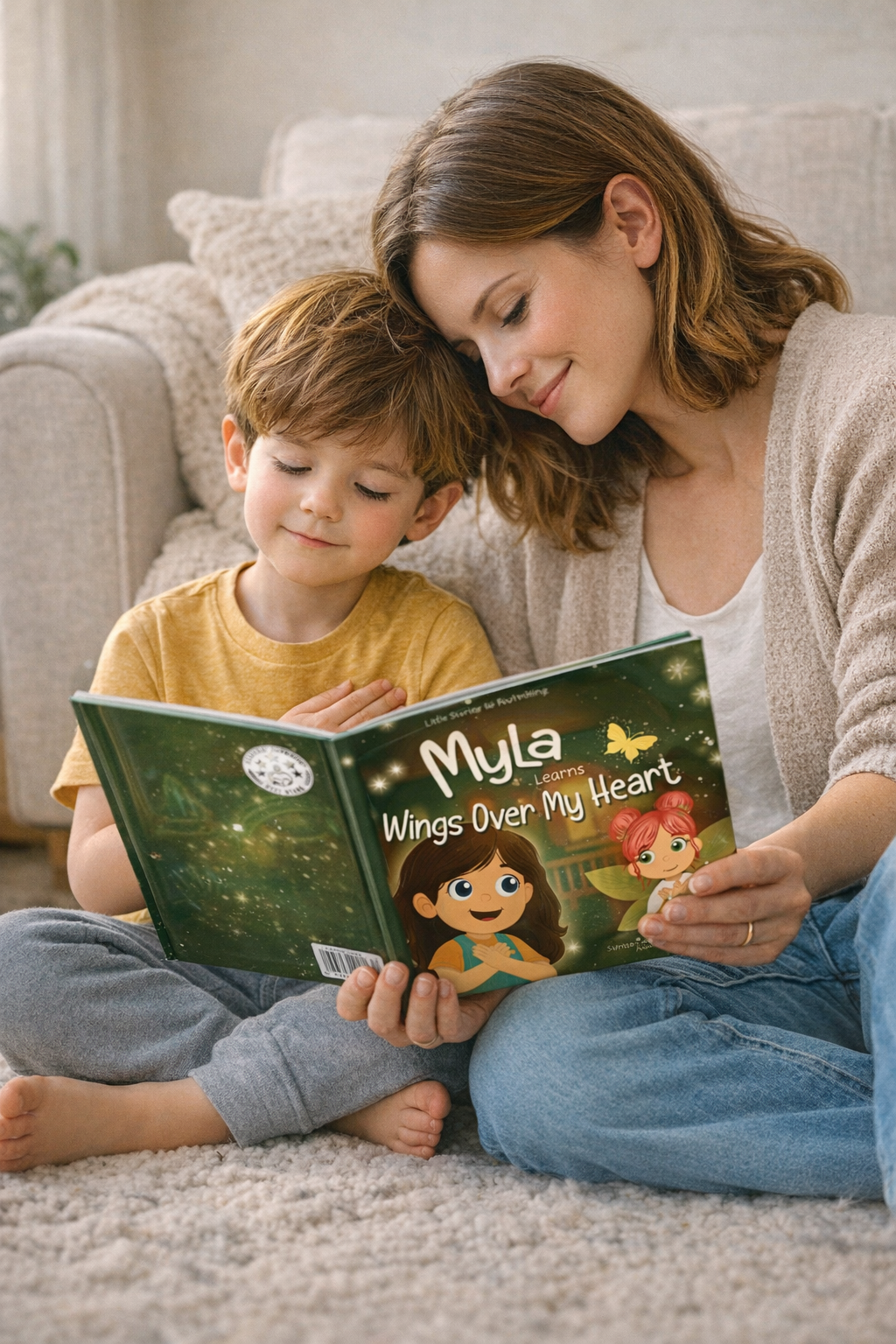
If your child connects with stories, Myla Learns Wings Over My Heart offers a gentle way to explore the same steps we teach in our Notice → Connect → Listen → Validate → Choose framework:
- Notice how sometimes big feelings show up as sensation in the body before you have words for them.
- Connect with a simple calming self-soothing practice children can return to again and again.
- Listen to what the feelings in the body may be trying to say.
- Validate emotions with warmth, awareness, and care.
- Choose what to do next from a calmer, more connected place.
The story gives children a character who feels what they feel and shows them a simple, relatable way to move through big emotions with clarity and confidence.
Questions often asked by caring grownups on this journey too.
How do I help my child learn where feelings are showing up in their body?
Download PrintableA simple way to help your child learn where feelings are showing up in their body is through a short, story‑led body scan. If you want a gentle script you can use tonight, you can download our free "Stop and Notice Body Scan Activity With Myla and Aditha."
☀️Read More from My Summer Survival Series
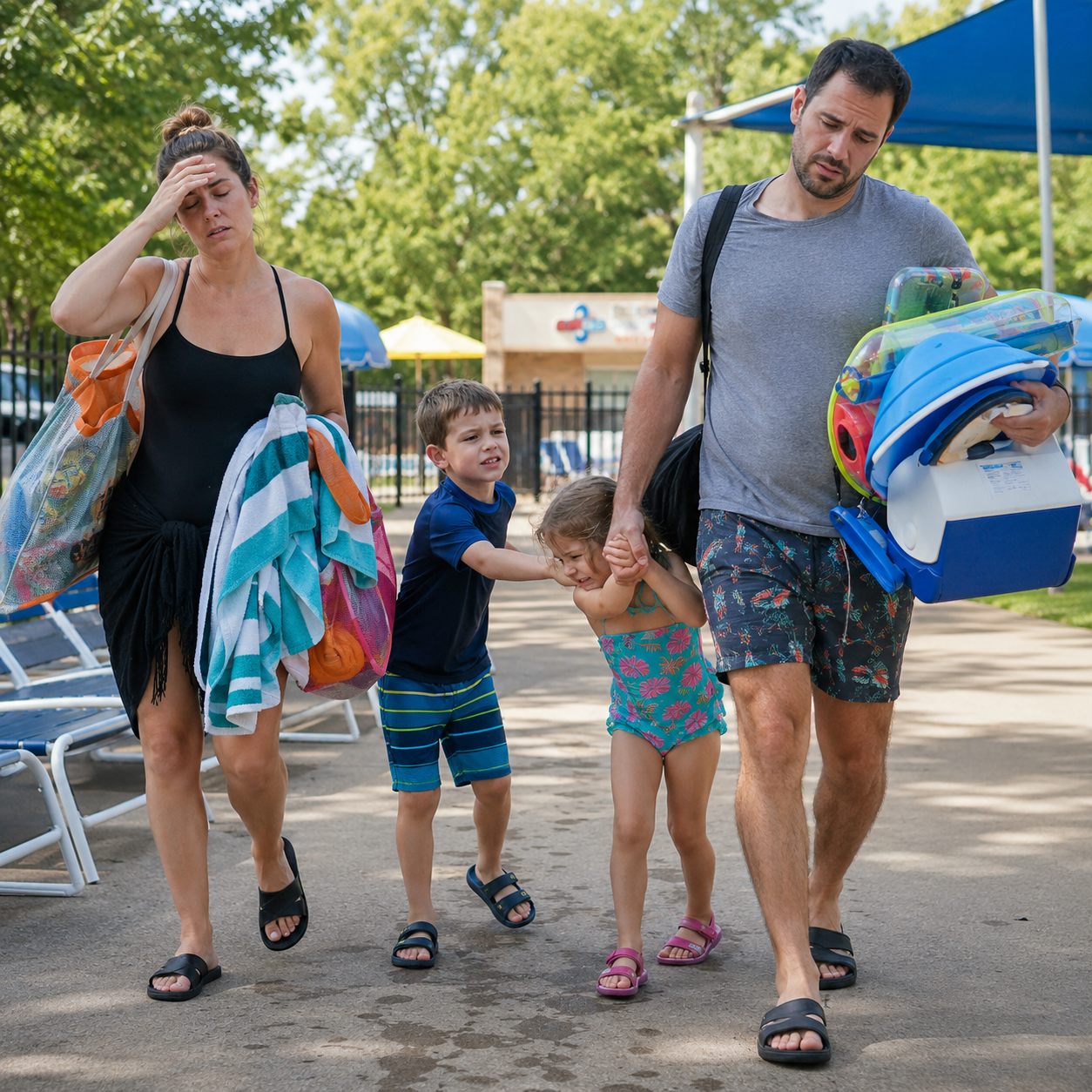


Angela Thibault is the creator of Satori Kid Club and the author and illustrator of children’s stories that children’s stories that help children learn to process BIG feelings with confidence. She is a Relational Growth Specialist who guides families in practicing emotional awareness together through dual growth between the grown up and the child. A mother for twenty-eight years, Angela has spent the last fourteen years dedicated to early childhood emotional development and relationship-based learning.
Available Now!
Also Available in
Canada Online At:
(Availability May Vary)

and in the U.S. Online At:
(Availability May Vary)




Additional Posts You Might Like!